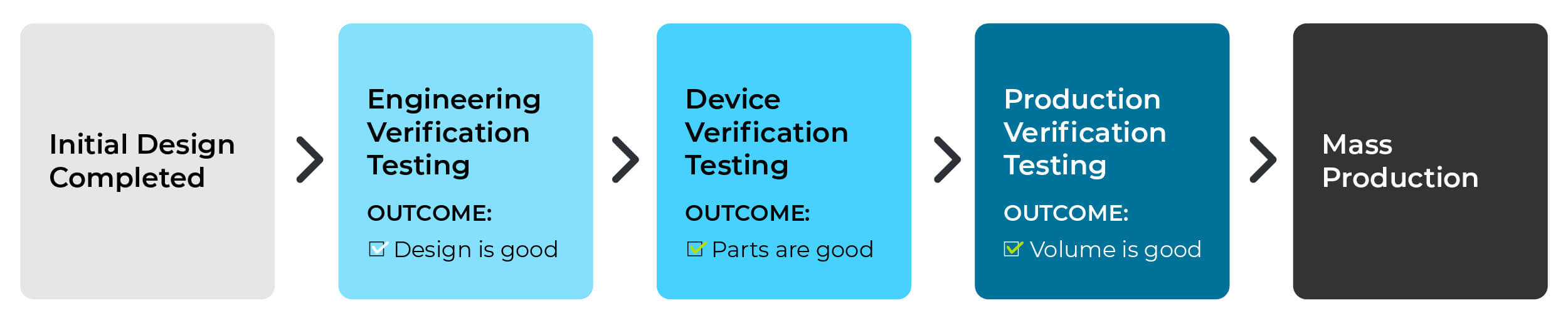
Achieving a successful product requires continuous testing and refinement prior to production release. Once a product’s design requirements are created and a proof of concept has been made, the productionization process really begins. This productionization process is a series of refinement stages and structured testing known as EVT, DVT, and PVT. Together, these three phases ensure that the product design works as intended, that components and assemblies meet specifications, and that production processes can reliably scale.
Our engineering and manufacturing teams use these phases to bring products from first prototype to production-ready efficiently. At Hatch, production-ready means consistent parts and repeatable assembly with quality built into every step. But getting to production ready is a journey.
Understanding EVT, DVT, & PVT
EVT: Engineering Verification Testing — Proving the Design Works
Purpose: Confirm that the design functions as intended.
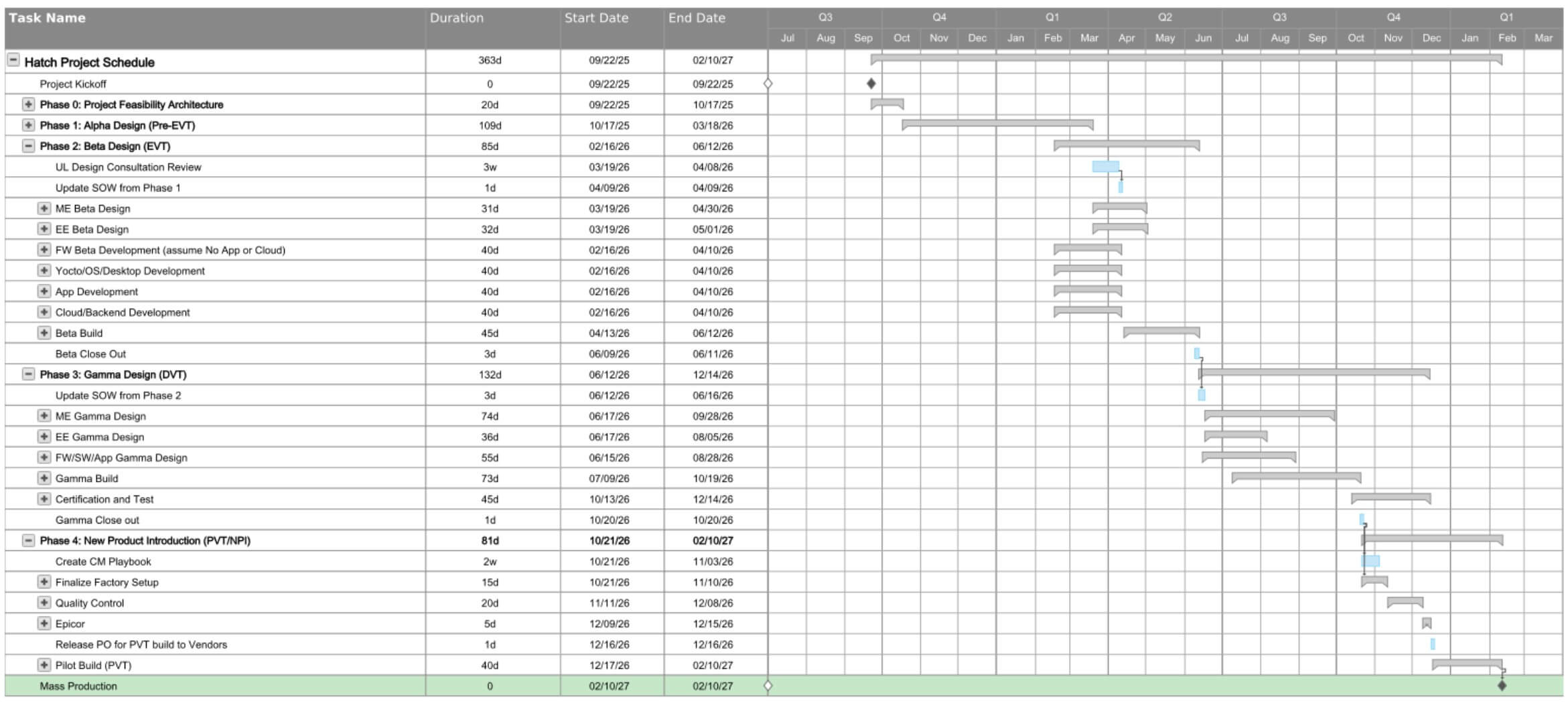
The first step in this journey is the Engineering Verification Test (EVT) phase. The goal of this phase is to verify that the initial design has all the functionality of what will be produced and to identify any initial potential issues before moving forward. During this phase, the product is built using rapid prototyping processes to allow for fast iteration. This is where most engineering design firms stop, but at Hatch, this is where our magic is just getting started.
Typical EVT builds include 2 to 50 units, and the iteration of prototypes is extensive. Mechanical components are built and tested multiple times. Electrical architecture and full PCBAs are prototyped for functionality and testing. The software and firmware for the product move from EVKs to running on the newly built prototype.
The EVT build, sometimes called the Beta Build, is where Hatch’s engineers perform functional, and even pre-EMI/EMC testing to ensure the design meets performance expectations.
A low yield is common and expected; this is the phase where design and functional issues are caught and corrected early as opposed to finding issues downstream in manufacturing. At Hatch, we like to say that prototypes teach us one thing: where all the issues are.
EVT Output: A validated design that’s ready for Design for Manufacturing (DFM) refinement.
DVT: Device Verification Testing — Proving the Parts Are Good
Purpose: Confirm that the parts can be manufactured to meet the product specifications and standards. This is the first time the product is built using near-final manufacturing processes.
Once the design is frozen, the Device Verification Test (DVT) phase focuses on:
- Applying the lessons learned from the EVT phase
- Setting up the product’s supply chain
- Starting the Design for Manufacturing (DFM) process with mass production vendors including tooling and production setup such as jigs, fixtures, and test stations
- Testing that the manufacturing vendors can make individual parts to spec
- Meet all required standards and certifications
DVT builds (aka the Gamma Build) typically include 50 to 500 units. This quantity of units is important because the number of product development stakeholders increases drastically. These units are used for:
- ME/EE/SW/FW engineering teams need DVT prototypes to test
- Vendors need units to tune their processes
- Production and quality control teams need units to develop out production processes
- Prototype units are used for rigorous testing such as burn-in, drop, ingress protection (IP), environmental life testing (ELT), thermal, vibration, and certification testing like UL and FCC (EMI/EMC)
All of these teams and steps are necessary to validate that the device can be manufactured correctly and meets industry requirements.
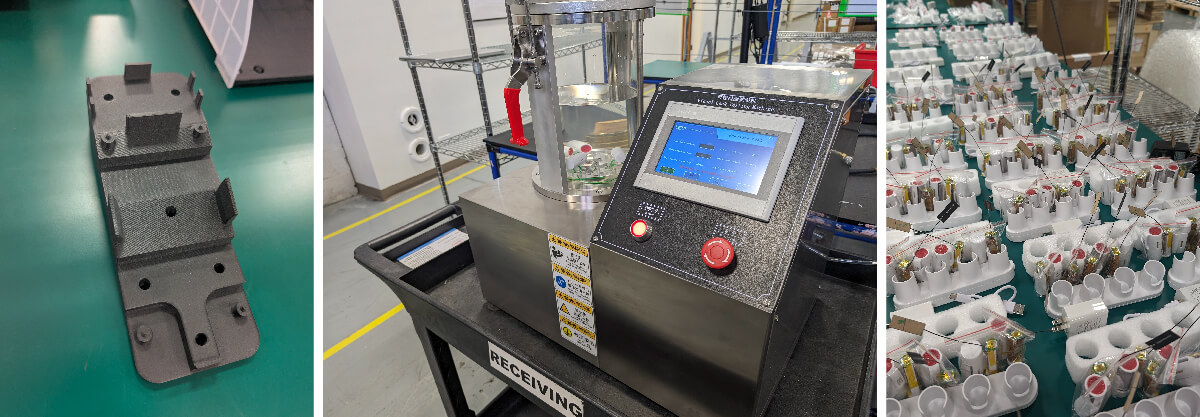
During DVT, yield and quality control (QC) processes are refined. While a large number of parts are produced, the yield is still low as each stakeholder iterates on their individual manufacturing process.
DVT Output: Supply chain setup, individual part manufacturing established, production procedures and equipment initially developed, and certification complete. Some units may even be suitable for limited sales or pilot deployment.
PVT: Production Verification Testing — Proving the Volume Is Good
Purpose: Confirm that the production line can build the product consistently and efficiently at scale.
In the Production Verification Test (PVT) phase, the complete manufacturing chain is put to the test to build at volume for the first time. This is the first true production test run (aka the Pilot Build), often involving 100 to 1000 units. While the goal in DVT was to verify each part could be made correctly, the goal of PVT is to verify production consistency.
In this phase, production volume verification is performed at every stage in the manufacturing chain, including:
- Initial documentation and vendor setup including Engineering Change Notices (ECNs) and vendor data flow-down
- Vendor part production and inspection checkpoints
- Review and approval of vendor First Article Inspection (FAI) reports
- Logistics planning including import processes, shipping timelines, and material tracking
- Receiving and incoming quality control (IQC)
- Warehousing, kitting, and material handling
- Production line assembly and provisioning
- Inline testing and final quality control (QC)
- Packaging and outgoing inspection
All steps are reviewed, validated, and optimized during the PVT phase to ensure consistency and efficiency at volume.
Hatch also uses this phase to evaluate labor and test time studies, refine design or manufacturing processes with vendors for scale, and validate fixtures, jigs, programming, and testing stations. Work instructions (WI) are updated throughout the build for any inefficiencies or process bottlenecks by the Hatch engineering and production teams on the factory floor.
Depending on the complexity of the product, PVT builds typically have yields between 75% and 95% and are customer-ready units.
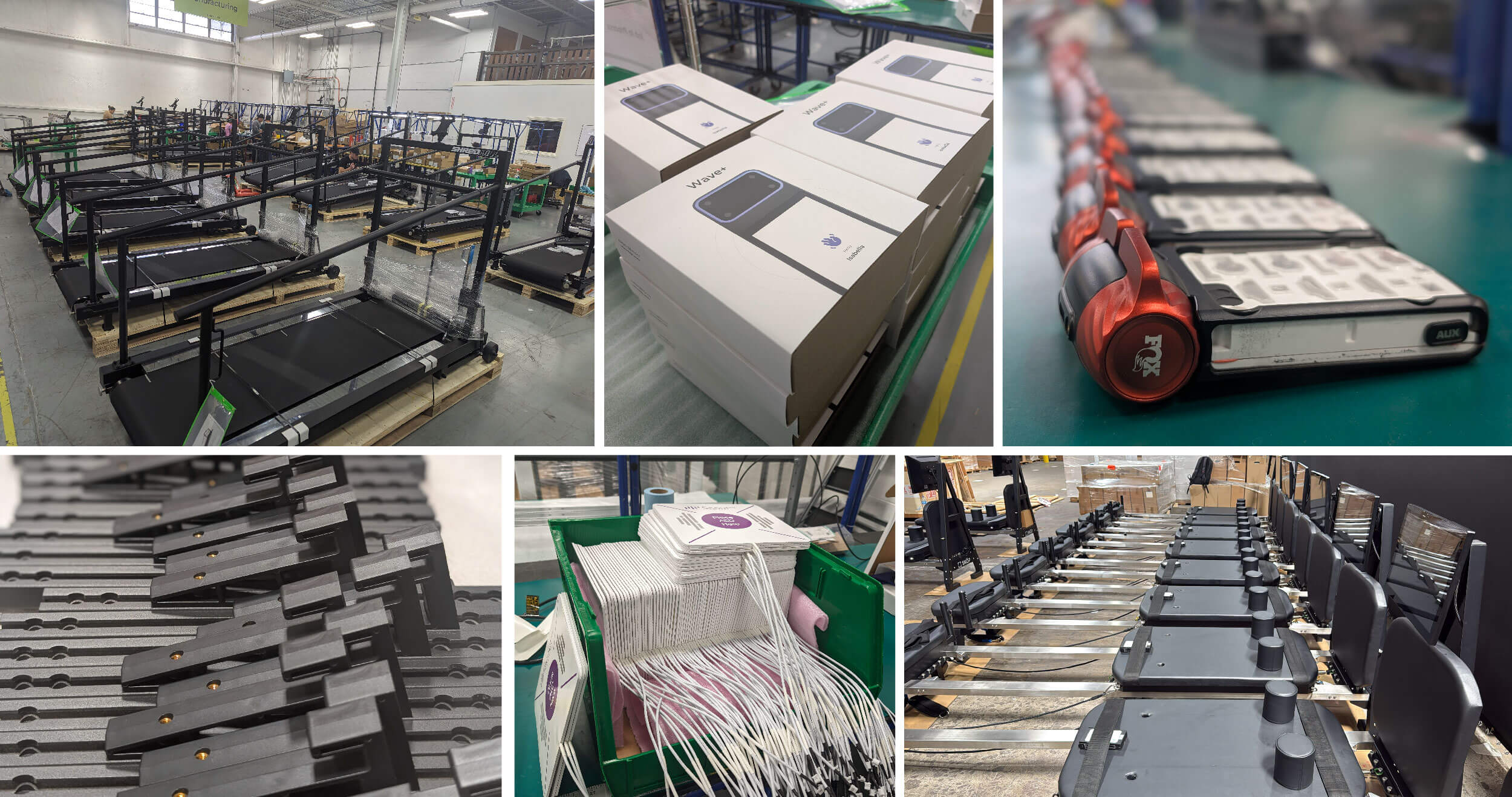
PVT Output: Every step of the production process has been optimized for mass manufacturing.
The Path to Mass Production
Once a product passes PVT, it is ready for mass production. By this point, the design is locked, suppliers are qualified, and manufacturing processes are tuned for yield, quality, and efficiency. The EVT, DVT, & PVT structure not only reduces risk but also creates a repeatable framework for launching high-quality products on time and within budget.
At Hatch, our integrated engineering and manufacturing teams manage this entire process from the first engineering designs all the way to launching a product into mass production. The same experts who design your product are responsible for building it which means decisions are more thoughtful, challenges are solved faster, and the entire process stays accountable from concept to commercialization.
Let’s talk about how Hatch can help guide your next product through EVT, DVT, and PVT with precision and confidence.